Signs Your Drains Need More Than a Plunger
One slow sink is a nuisance, but a pattern across the house usually points to a problem that a plunger will not reach.
October 2, 2026 · 4 min read
A plunger is a fine tool. For a single toilet or a single sink with a clog sitting close to the fixture, it often works. The trouble starts when you keep reaching for it. If the plunger is a regular part of your week, or the problem keeps coming back an hour after you put it away, the clog is probably not where you think it is.
A plunger fixes a local problem
Each fixture in your house has its own short drain that connects to a larger branch line, which in turn connects to the main line leading out to the sewer or septic system. A plunger works on the first few feet. Pressure pushes against a blockage near the trap and breaks it up. That is why it handles hair in a tub or a toy in a toilet. It cannot do much about trouble further down the line.
Signs the clog is deeper
- More than one fixture is slow at the same time, such as a shower and a bathroom sink together.
- A toilet gurgles when you run the washing machine or drain a tub.
- Water backs up in a floor drain or the lowest tub in the house when upstairs fixtures run.
- The same drain clogs again within days or weeks of being cleared.
- There is a sewer smell near a drain, or in the basement, that does not go away.
- A patch of lawn above the sewer line is soft, soggy or unusually green.
Gurgling deserves attention. It is the sound of air being pushed through water because a line is partly blocked. One gurgling drain can be a quirk. A gurgling drain every time another fixture runs is the house telling you something is restricted downstream.
What to skip
When a plunger fails, the next move many people make is a bottle of chemical drain cleaner. It is worth thinking twice. These products are harsh, they do not remove most of what actually causes a deep clog, and if they do not work, the standing water that remains in the line is now full of chemicals. A plumber working on that line afterward has to deal with it. If a plunger did not work, cleaning with the right equipment is the next step, not a stronger chemical.
What real drain cleaning looks like
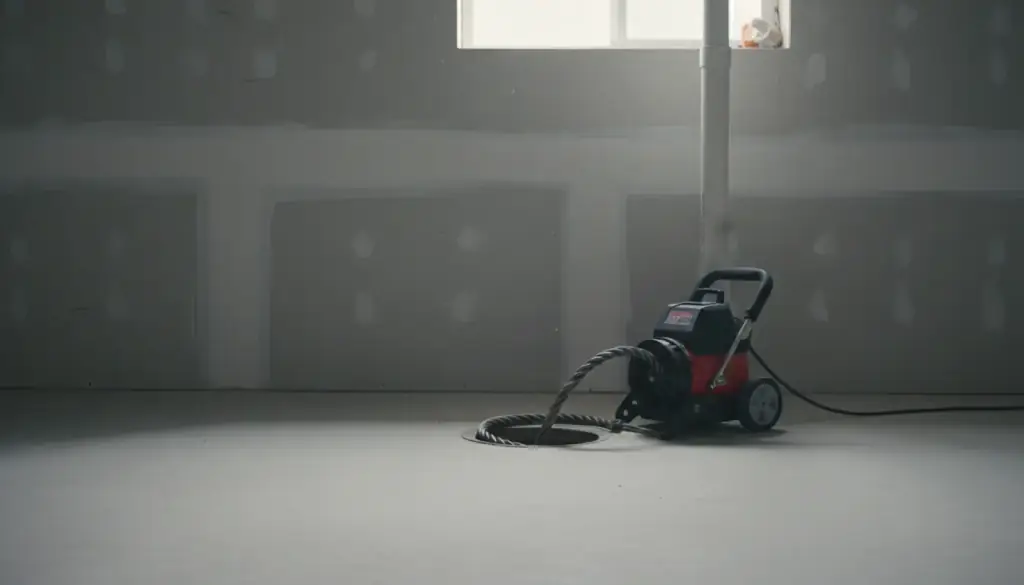
Professional drain cleaning uses a machine that feeds a rotating cable into the line. The cable reaches past the trap and the first bend, breaks through or catches the blockage and clears the path. Done properly, the plumber knows how far the cable traveled and what it met on the way, which helps tell the difference between a simple blockage and something more serious.
DB Plumbing lists drain cleaning among its core services, including clogged drains and regular drain maintenance. Regular maintenance matters because many clogs build slowly. Grease, soap residue, hair and wipes collect in layers. A line that is cleaned before it is completely blocked is easier to clear, and you avoid the middle of the night discovery that the basement drain is overflowing.
When the problem is the sewer line itself
Sometimes the cleaning works, the drain runs fine for a few weeks and then the same trouble returns. That pattern points away from a simple blockage and toward the line itself. A cracked or broken sewer pipe lets roots and soil in, and a line with an opening keeps collecting trouble no matter how often it is cleared. Bad connections can cause the same pattern, where a drain, vent or storm line is tied in somewhere it should not be.
This is where sewer smoke testing earns its place. Instead of clearing the line again and hoping, a smoke test pushes visible smoke through the system and shows where it escapes. Cracks, breaks and hidden openings show up without invasive digging. If you have a drain that keeps coming back, or a sewer smell that survived a cleaning, ask whether a smoke test makes sense before you spend more on repeat visits.
A simple rule of thumb
- One fixture, once: try the plunger.
- One fixture, again and again: call for drain cleaning.
- Several fixtures, or backups in the lowest drain: call right away, because the main line may be involved.
- Cleaning that does not last, or odors that do not leave: ask about finding the cause, including a smoke test.
None of this needs a diagnosis from you. Your job is to notice the pattern and describe it. Which fixtures are slow, when it started, whether the smell comes and goes. That information is useful to a plumber and often shortens the visit.
The drain cleaning page on this site covers how DB Plumbing handles clogged drains and maintenance, and the drain and sewer page covers what comes after when the problem runs deeper. To describe your situation, call DB Plumbing in Brainerd at (218) 851-3424, Monday to Friday, 8 to 5.
DB Plumbing, (218) 851-3424
Call (218) 851-3424More articles
Tank or Tankless Water Heater: Which Fits a Brainerd Lakes Home?
Both kinds of water heater work well in a northern Minnesota house, but they suit different households, so it pays to decide before the old one fails.
What a Sewer Smoke Test Finds, and When to Book One
A smoke test turns a hidden underground problem into a visible plume, so you know where the trouble is before anyone picks up a shovel.