Sump Pump Care Before the Wet Season Hits
Your sump pump sits quietly for months, then has to work perfectly on the worst day, so check it on a dry day instead.
October 2, 2026 · 4 min read
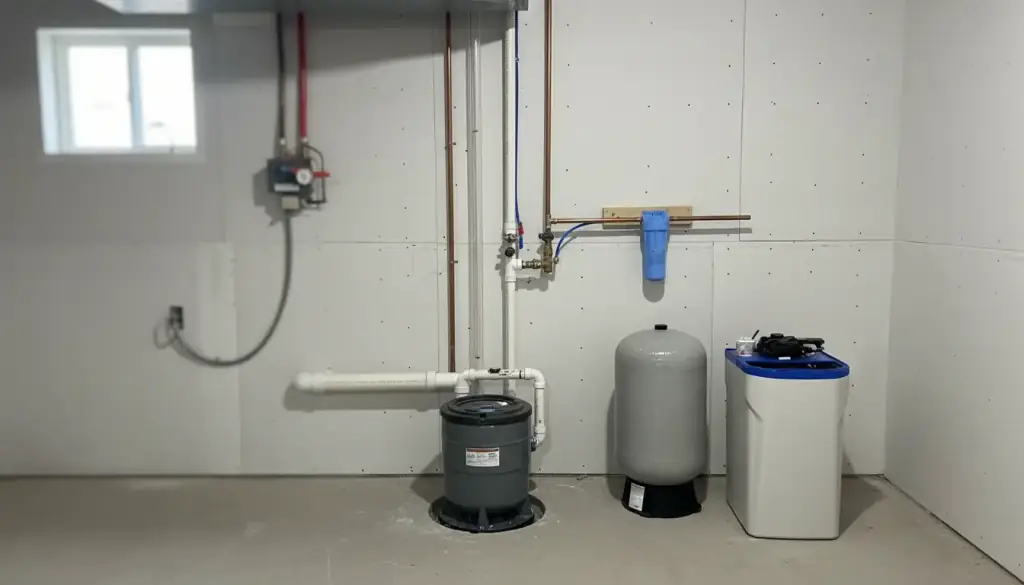
A sump pump has an odd job. It does nothing for weeks, then has to run hard exactly when the ground is saturated and the basement is at risk. In the Brainerd Lakes area, that usually means the spring thaw or a stretch of heavy rain. The worst time to find out your pump has stopped working is while water is already coming up through the pit. The best time to find out is on a dry afternoon with a bucket in your hand.
What a sump pump actually does
Many basements have a pit, the sump basin, set into the floor. Groundwater that collects around the foundation drains into it. When the water in the pit rises to a certain level, a float lifts and switches the pump on. The pump pushes the water out through a discharge pipe and away from the house, and the float drops as the pit empties. That small loop is what separates a dry basement from a wet one.
Because the loop depends on moving parts, a float, a motor and a check valve, any one of them can fail quietly. A pump that has not run in months can seize up. A float can snag against the side of the pit. Neither shows until the pump is asked to work.
A five minute test you can do yourself
- Look into the pit. Clear anything that does not belong there, such as gravel, dirt or debris that could jam the float.
- Pour a bucket or two of water slowly into the pit until the float rises.
- Watch the pump switch on, empty the pit and switch off again.
- Listen while it runs. A smooth hum is good. Grinding, rattling or a motor that sounds strained is not.
- Confirm the water actually leaves through the discharge pipe, and that it does not run back down into the pit when the pump stops.
If the pump does not start, starts and shuts off too soon, or runs without moving water, do not wait for the next storm. Those are the symptoms a plumber can usually trace to a stuck float, a worn pump or a failed valve.
Check the discharge line
The pump is only half of the system. The other half is where the water goes. Walk outside and look at the end of the discharge line while the pump runs. Water should flow out freely and spread away from the foundation, not pool beside it where it can soak back into the ground and return to the pit. Leaves, dirt or a nest in the opening can block it.
Winter adds its own problem in northern Minnesota. A discharge line can freeze, and a frozen line gives the pump nowhere to send its water. Look at the outlet before the cold sets in and again during a thaw, and make sure the water has a clear path to move away from the house.
The check valve and the noise it makes
Most setups have a check valve on the discharge pipe, a one-way valve that keeps water from falling back into the pit after the pump shuts off. If you hear a thump or a rush of water just after the pump stops, that is the sound of water returning to the pit. The pump then has to work again sooner than it should, which wears it faster. A valve that no longer seals is a small repair that saves a bigger one.
Think about the power
A sump pump is an electric appliance, and storms are exactly when the power goes out. If your pump has no backup, a heavy rain and an outage together can leave you with a basement that fills while the pump sits idle. Ask your plumber about backup options that match how your home is set up, and if you are planning a standby generator, tell them the sump pump is one of the loads that matters most.
Signs it is time to call someone
- The pump runs constantly, even when it has not rained.
- It never seems to run at all, even after you add water.
- You hear grinding, rattling or a motor that sounds tired.
- The pit has rust, sludge or a layer of debris you cannot clear.
- Water has come up in the basement before, even once.
- You have a pit and no pump, or a pump that is clearly past its working life.
Repair is sometimes enough. Sometimes a pump has done its job for as long as it reasonably will, and replacing it before it fails is cheaper than cleaning up after it does. A plumber looking at it in person can tell you which situation you are in.
If you do not have a sump pump
Some basements stay dry for years and then do not. If you have seen damp patches, a musty smell or water along the wall after a hard rain, a sump pump installation may be worth discussing. It is much easier to plan a pit and a discharge route calmly than to do it with water already on the floor.
DB Plumbing handles sump pump maintenance, repairs and installations to help guard against basement flooding. The sump pump page on this site has the details. To book a check before the wet season, call DB Plumbing in Brainerd at (218) 851-3424, Monday to Friday, 8 to 5.
DB Plumbing, (218) 851-3424
Call (218) 851-3424More articles
Tank or Tankless Water Heater: Which Fits a Brainerd Lakes Home?
Both kinds of water heater work well in a northern Minnesota house, but they suit different households, so it pays to decide before the old one fails.
What a Sewer Smoke Test Finds, and When to Book One
A smoke test turns a hidden underground problem into a visible plume, so you know where the trouble is before anyone picks up a shovel.